Projects > Nature Embedded > Points of View
Points of view
From a holistic standpoint we can have three distinct points of view: Terrestrial, Underwater and Ariel. Now there are millions of species with unique points of view and how they see and perceive the nature. But to have a diverse yet more relatable and general visual experience, three specific species were taken into account, having three distinct visual point of view scenarios: Dog, Bird and Fish.
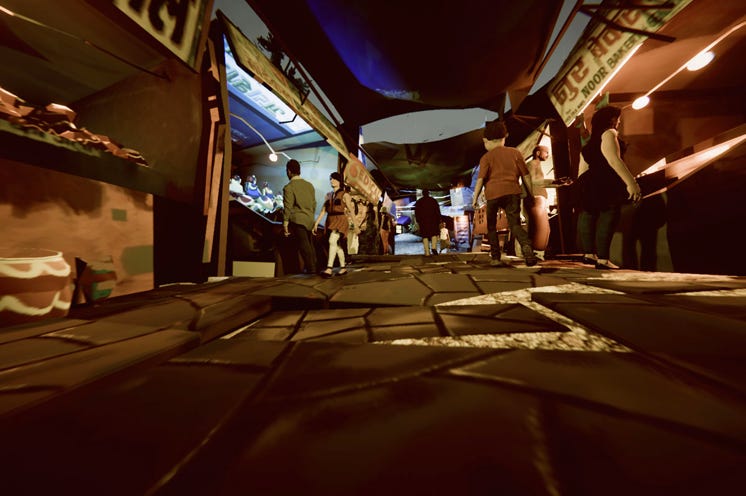
Dog - Terrestrial point of view
Even though being one of the most closely associated animal with man, the dog’s perception of the modern world is quite unusual and distinct from man, with their perception of color being very different from other species.
Bird - Aerial point of view
The skillset of aviation of birds have assisted them to cover vast lands in a quick span of time. Birds also have a vibrancy in their vision all the more help them in capturing their prey even through long distances.

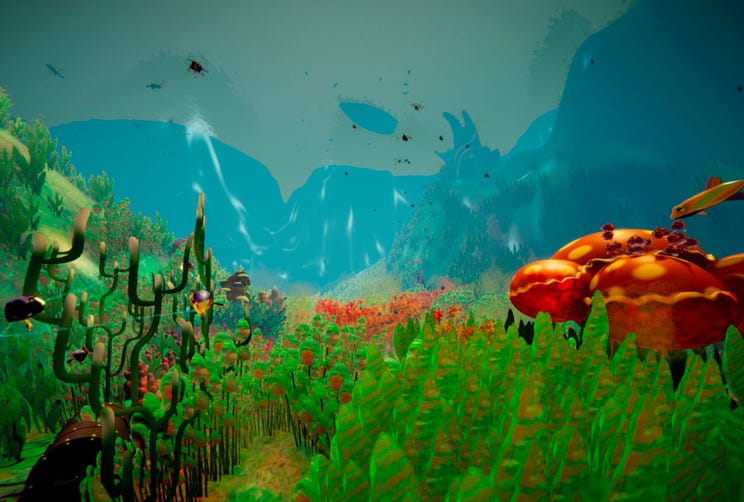
Fish - Underwater point of view
Earth being covered two thirds by water, the viewpoint of the fish is like a whole different world altogether. The marine life - from their visually stunning aquatic plants and reefs to the deeps dark trenches with unknown depths, is very hostile yet stunningly beautiful.
Research
Desktop research: We started with online research which included watching several documentaries from National Geographic, Animal Planet, BBC Planet earth etc. We tried to understand the animal behaviours, their movement and how they react to the nature we share with them.
Immersion: To keep it relevant to India, we observed a lot of local references, like how typically an Indian street looks and operates like, how the shops and houses are typically painted and the visual elements we see around. We also visited several aquariums to study the marine biodiversity.
Expert guidance: We had biodiversity experts, come and give us lectures and talks about marine life. We also had dog trainer to help us understand nuances about dog behaviour.
The mood board we created for the Dog’s POV to help us to visualise the kind of environment we want to build.

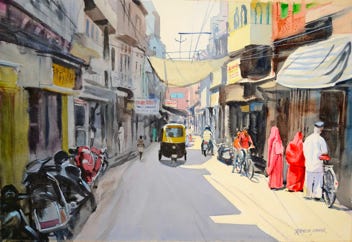
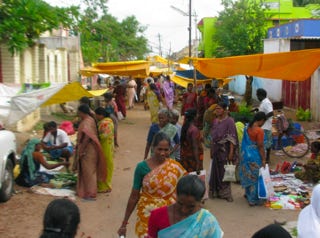
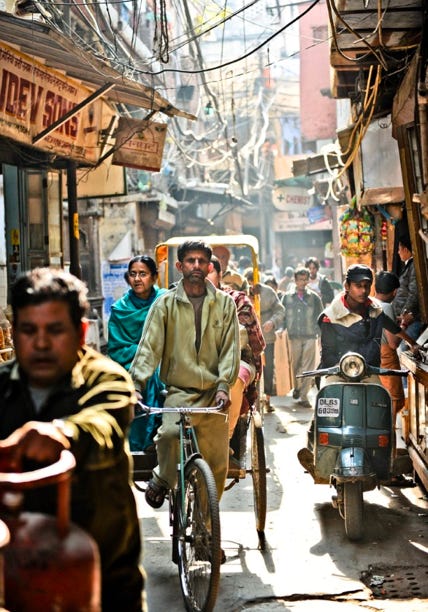
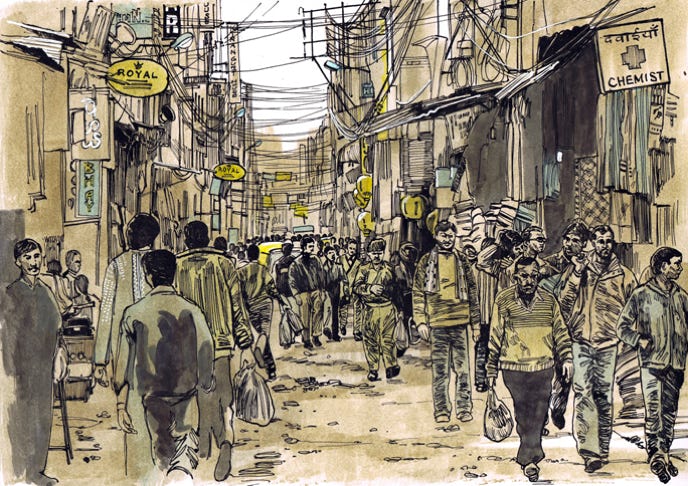
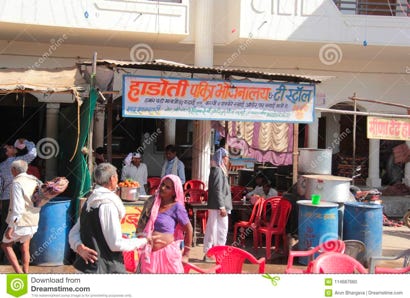
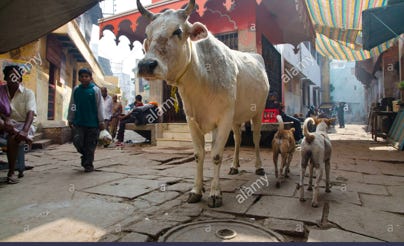
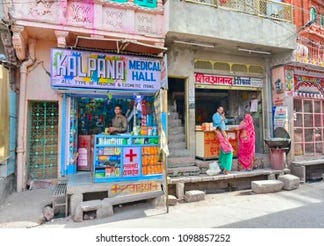
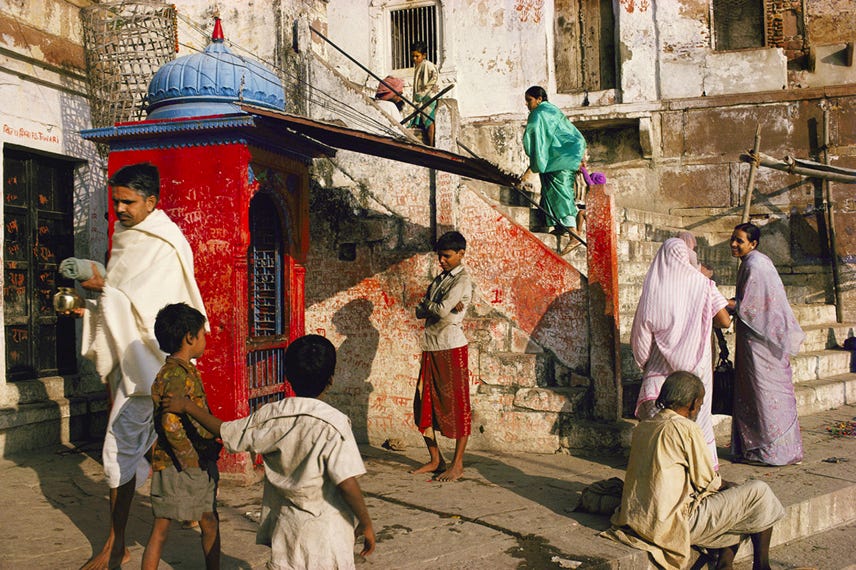
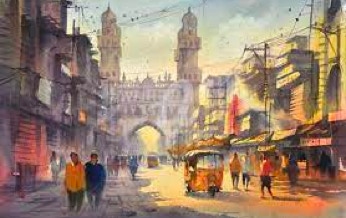
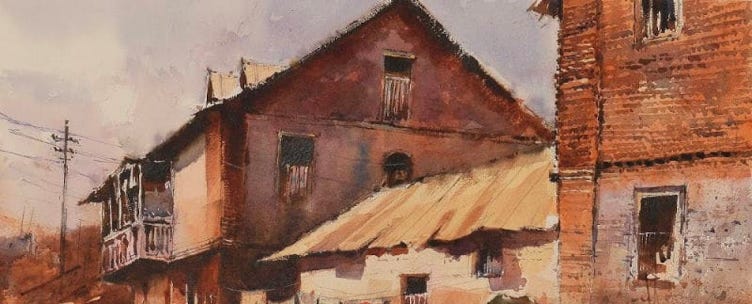
Image created by a fellow team memeber, not owned by me.
Case Study: Dog POV
Since the three POVs are of similar nature and similar processes were followed for each one of them lets have a in depth look at the processes we followed for the Dog’s POV.
Further Study
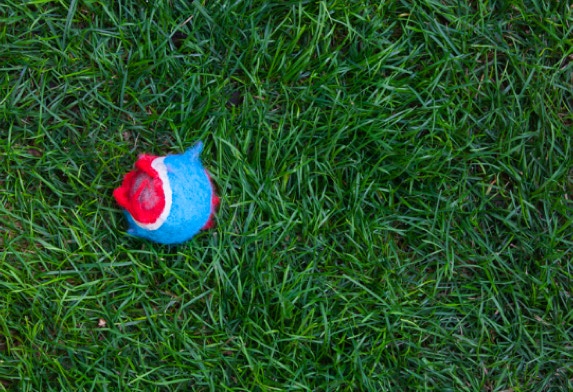

Normal human vision


Dog’s vision
Some of the interesting observations we came across during our research:
It is a generally known fact that a dog’s vision has limitations in their visual colour palette having red-green colour blindness, are less sensitive to the variations in grey shades and also their vision is half as sensitive to changes in brightness.
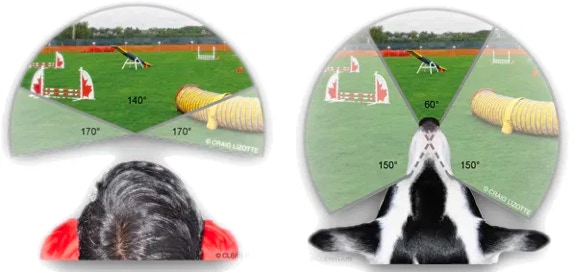
Dogs have eyes which are placed on the sides of the head, resulting in a visual field of 240 degrees compared with the human field of 200 degrees. The central, binocular field of vision in dogs is approximately half that possessed by humans. Dogs also tend to be nearsighted to varying degrees. Dogs typically have 20/75 vision. What this means is that they must be 20 feet from an object to see it as well as a human standing 75 feet away.
These are some of the points we have to simulate the point of view of a dog.
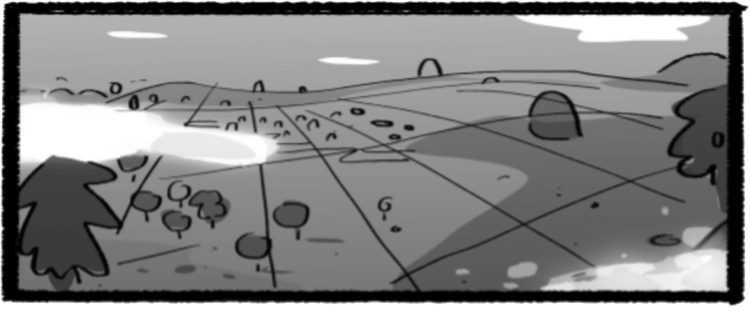
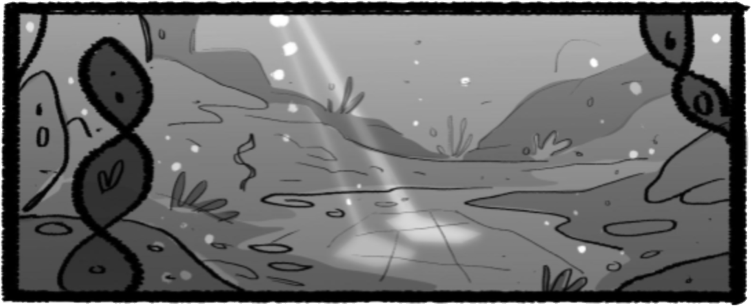
Preliminary sketches for the three points of view

Exploring the mediums of execution
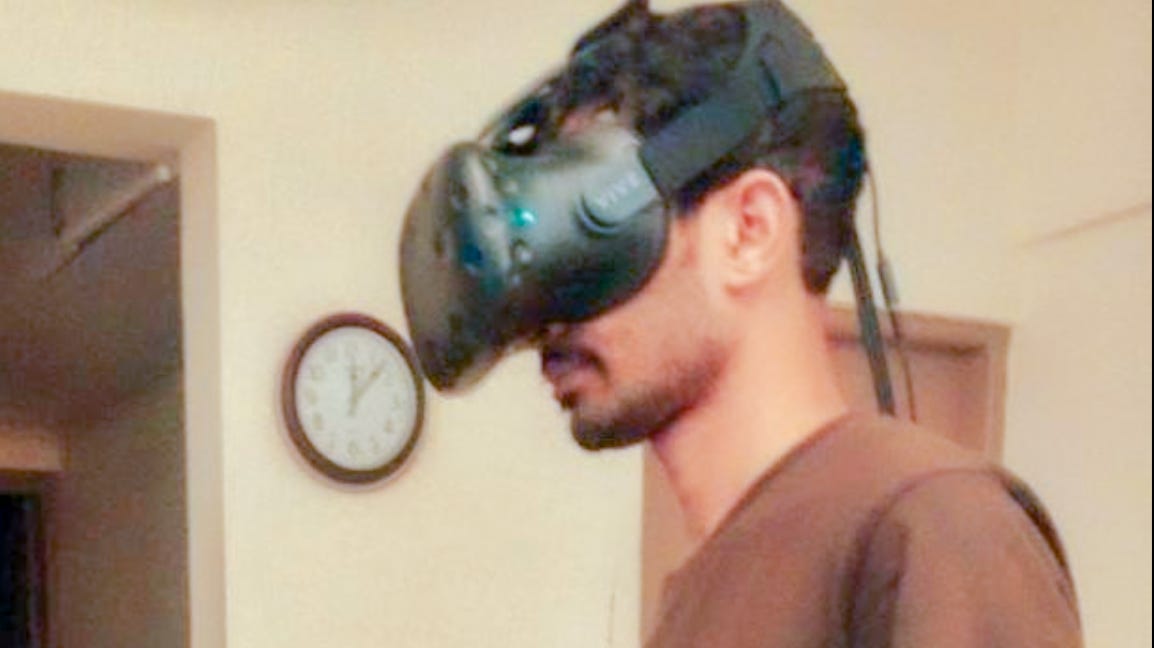
Virtual reality felt like the best way to experience these three points of view and we started exploring a bunch of VR Games and experiences and 360° VR content.
Issues with VR
1] Our target audience was primarily children, and VR is primarily targeted at Adults.
2] VR experiences often cause health-related issues including headaches, eye strain, dizziness, and nausea. Developers can partially deal with these issues at the hardware level by delivering balanced experiences with high refresh and frame rates.
3] Only one person can have the experience at a time and it isn’t feasible at a place like an art gallery with a large footfall. So, to cater to them we need more number of VR devices which would have cost implications. VR experiences often cause health-related issues including headaches, eye strain, dizziness, and nausea. Developers can partially deal with these issues at the hardware level by delivering balanced experiences with high refresh and frame rates. Also from a hygiene point of view since the exhibition was going to be held at Mumbai, the humid climate makes people sweat a lot in closed spaces and a sweaty wearable device won’t be feasible.
Solution
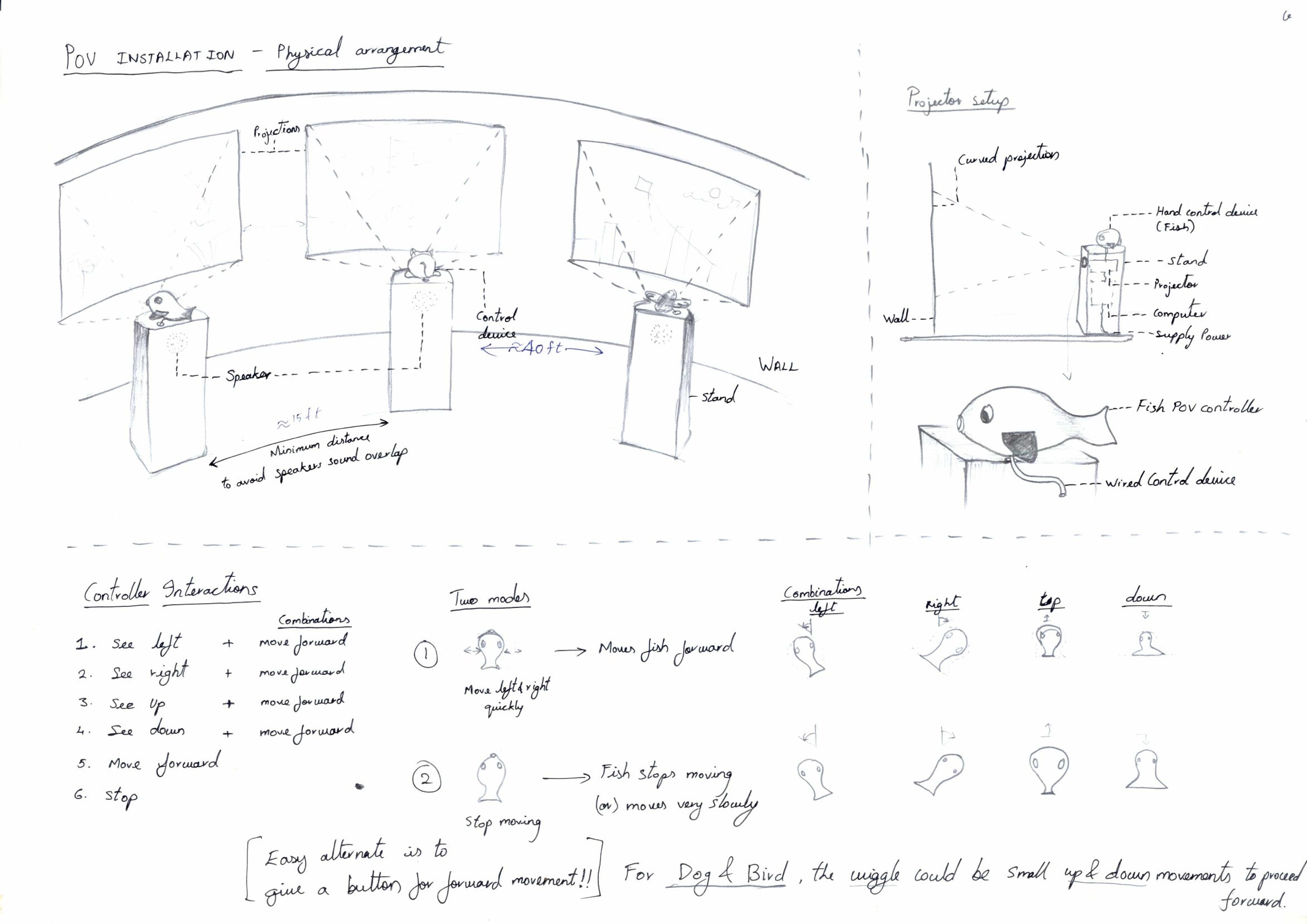
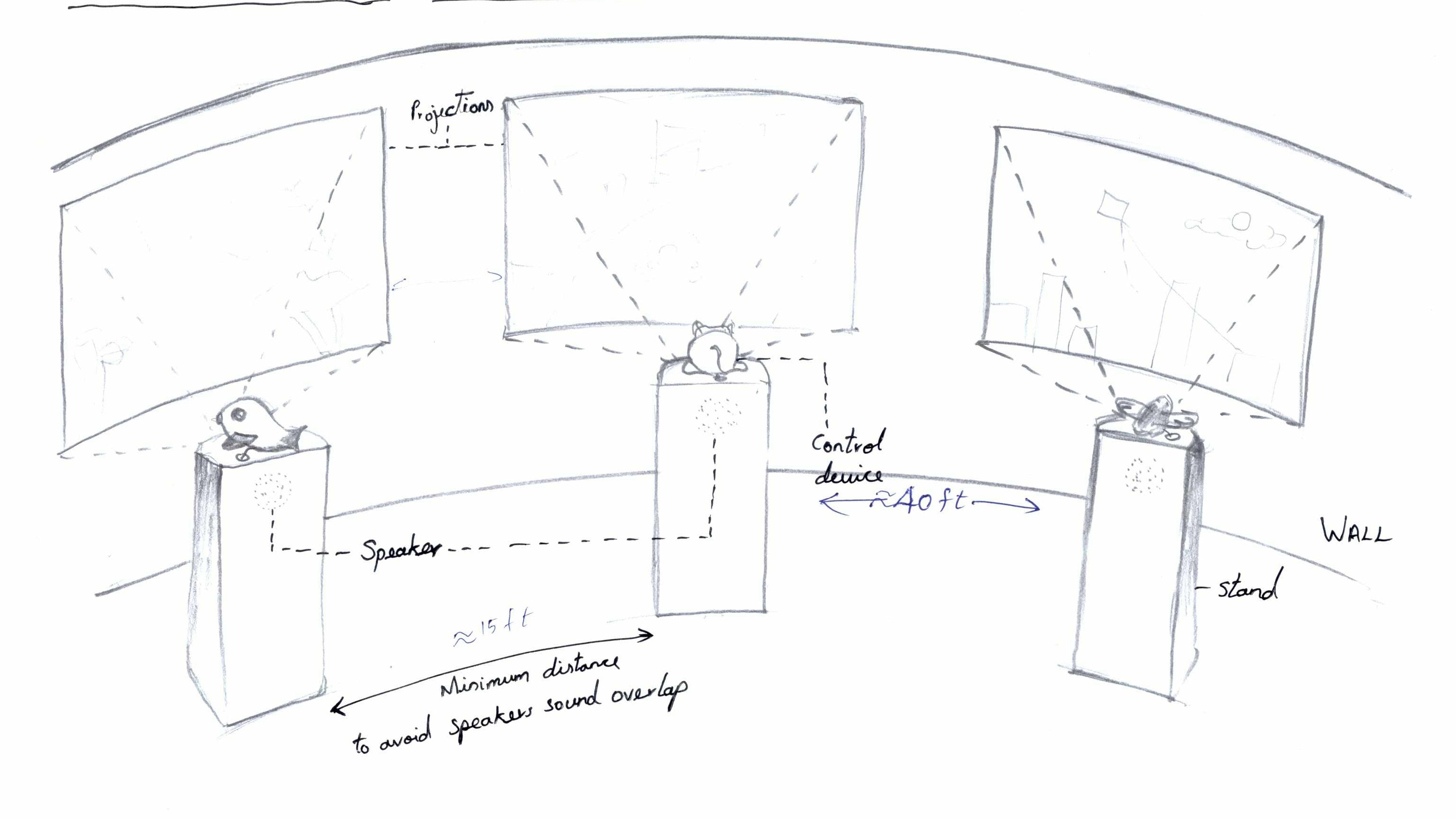
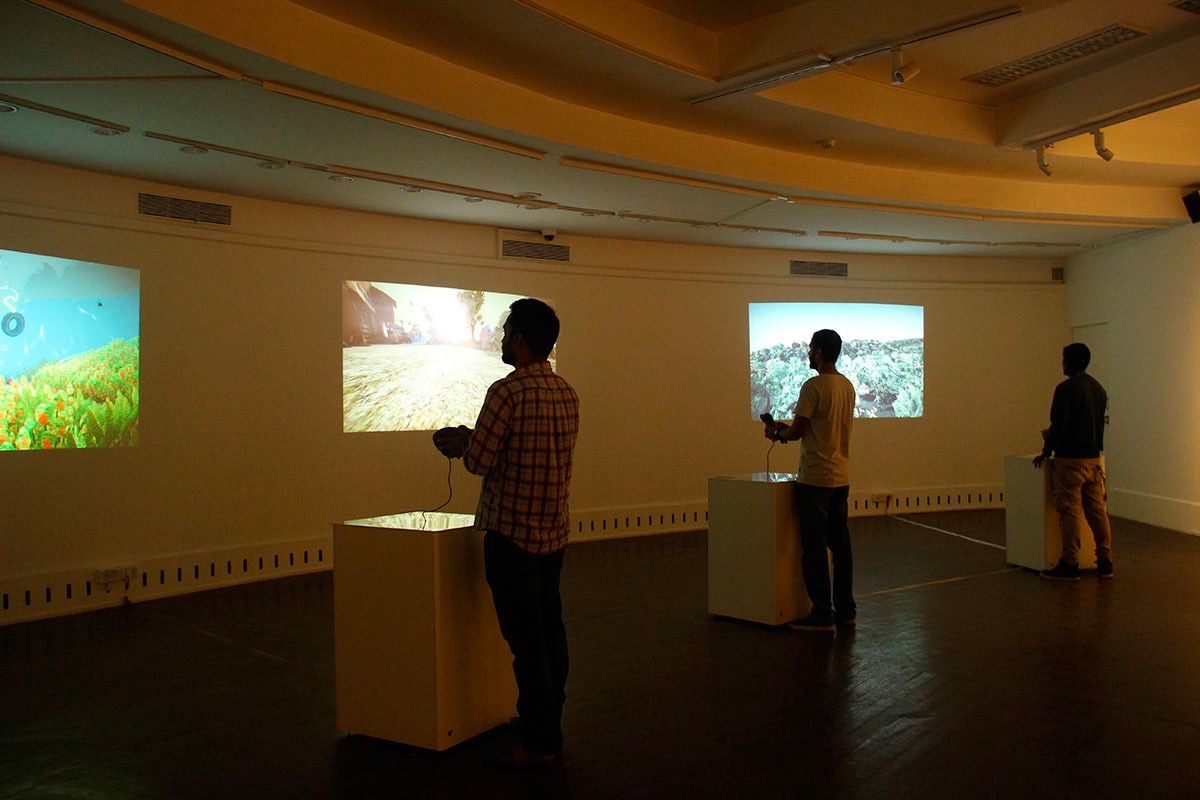
We started discussing these points and it lead us to developing a system which involved a first person interactive wall projection installation, in which the user can experience a certain character’s view of the world around them. Through this installation we gave a glimpse of how different animals actually perceive their surroundings taking into consideration on their eye level, visual colour palette, speed of their actions, etc.
Refining the concept
After this round of research, we narrowed down and refined the concept.
In spite of the dog being Man’s best friend, we know little about the way a dog perceives or smells its surroundings. This much is now known to us that the dog, unlike humans, views the world in yellows and greys only because the dog’s vision has limited colour palette, being colour blind to red-green colour and less sensitive to changes in greys!
We know, however, that the dog is gifted with a primordially strong sense of smell. As also a sharp sense of hearing and touch.
Many years ago, the famous avant-garde artist Andy Warhol had made a film – an entire play of activities through the point of view of the dog, including the dog speak lie a human and express an adequate amount of exasperation at the Human’s ways.
Storyboard
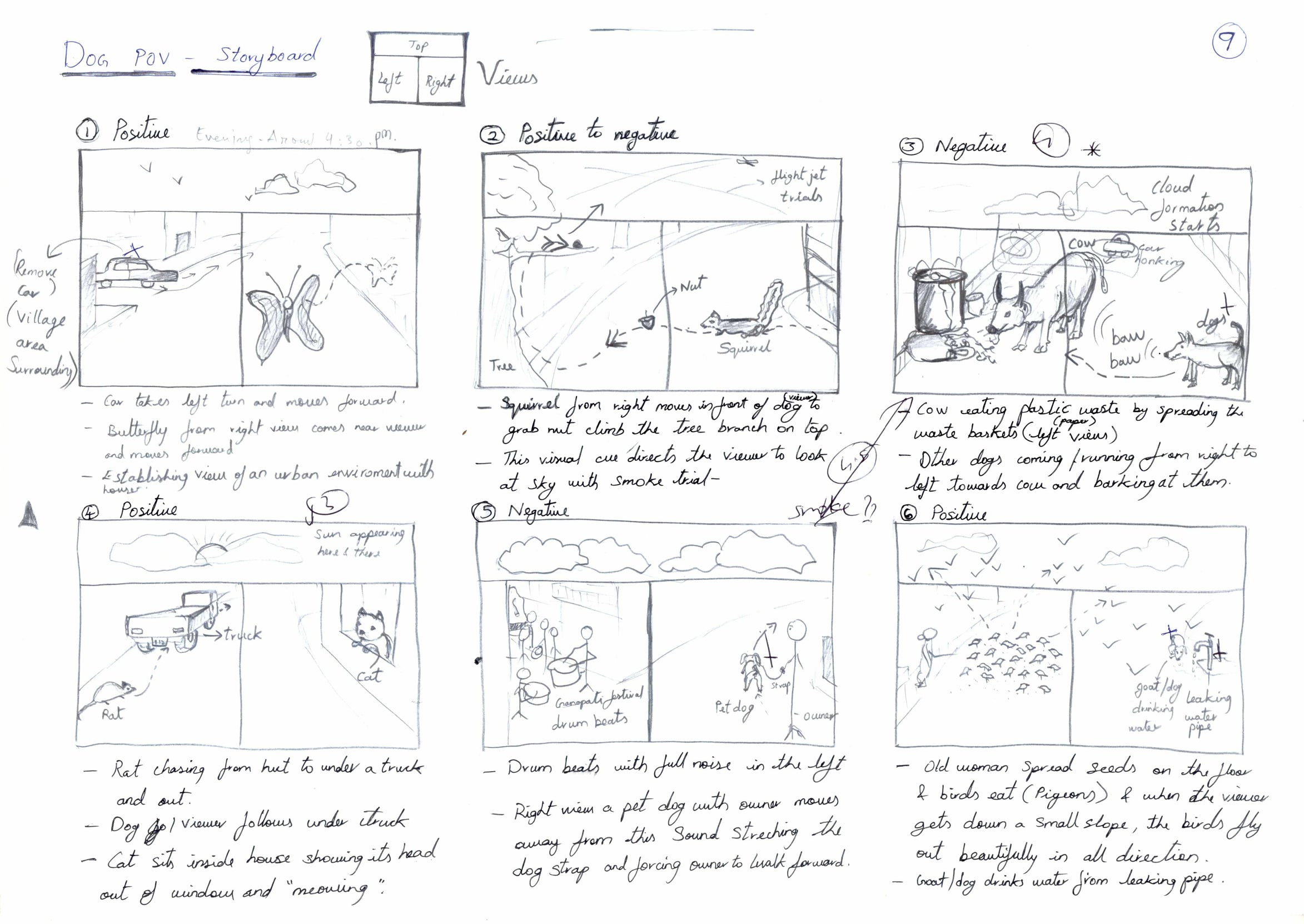
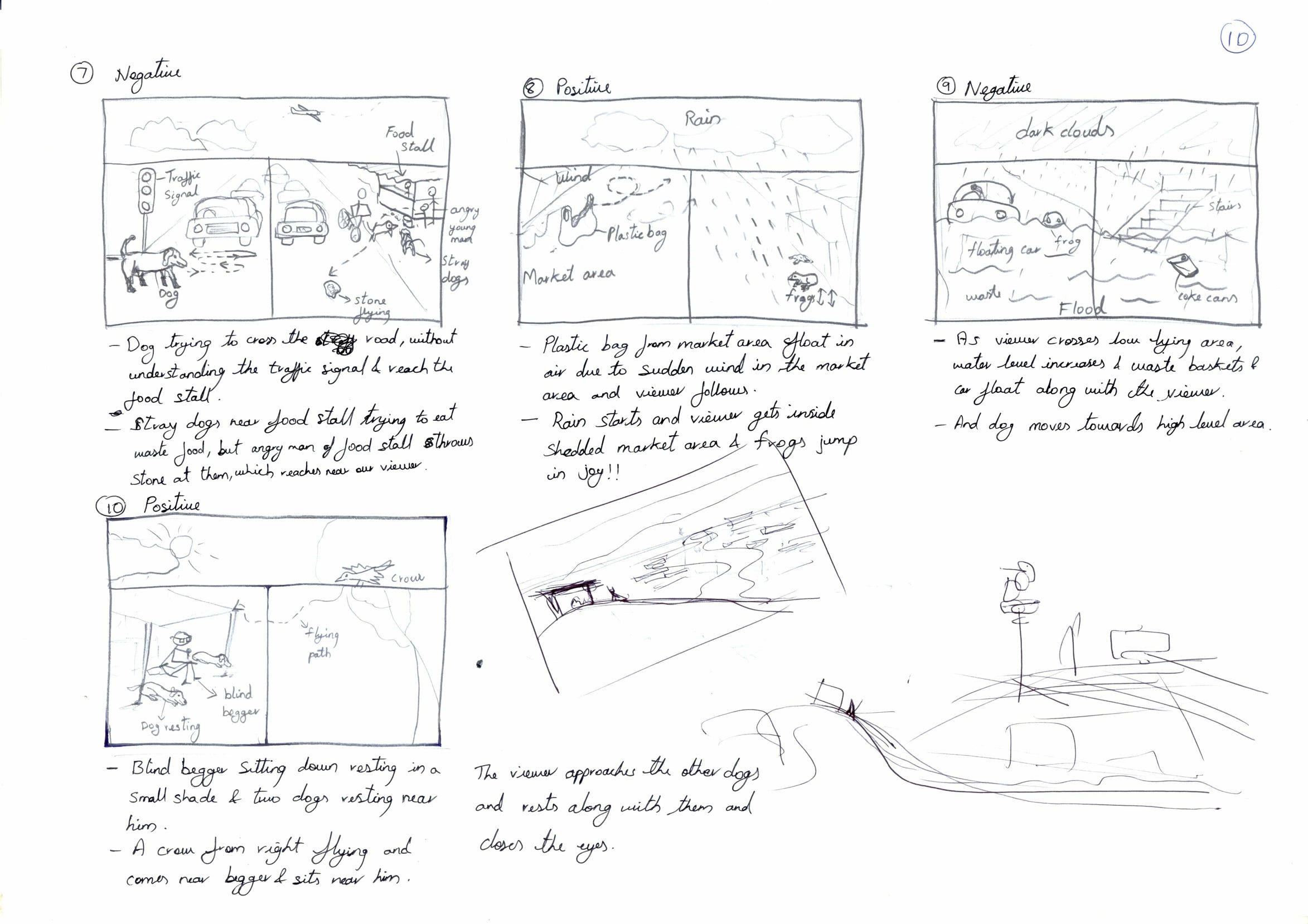
Based on the refined concept, we drafted a ‘Story’ which is a sequence of events with the dog as the central character and eventually drafted a storyboard which would act as the guideline for the processes to follow.
Layouts
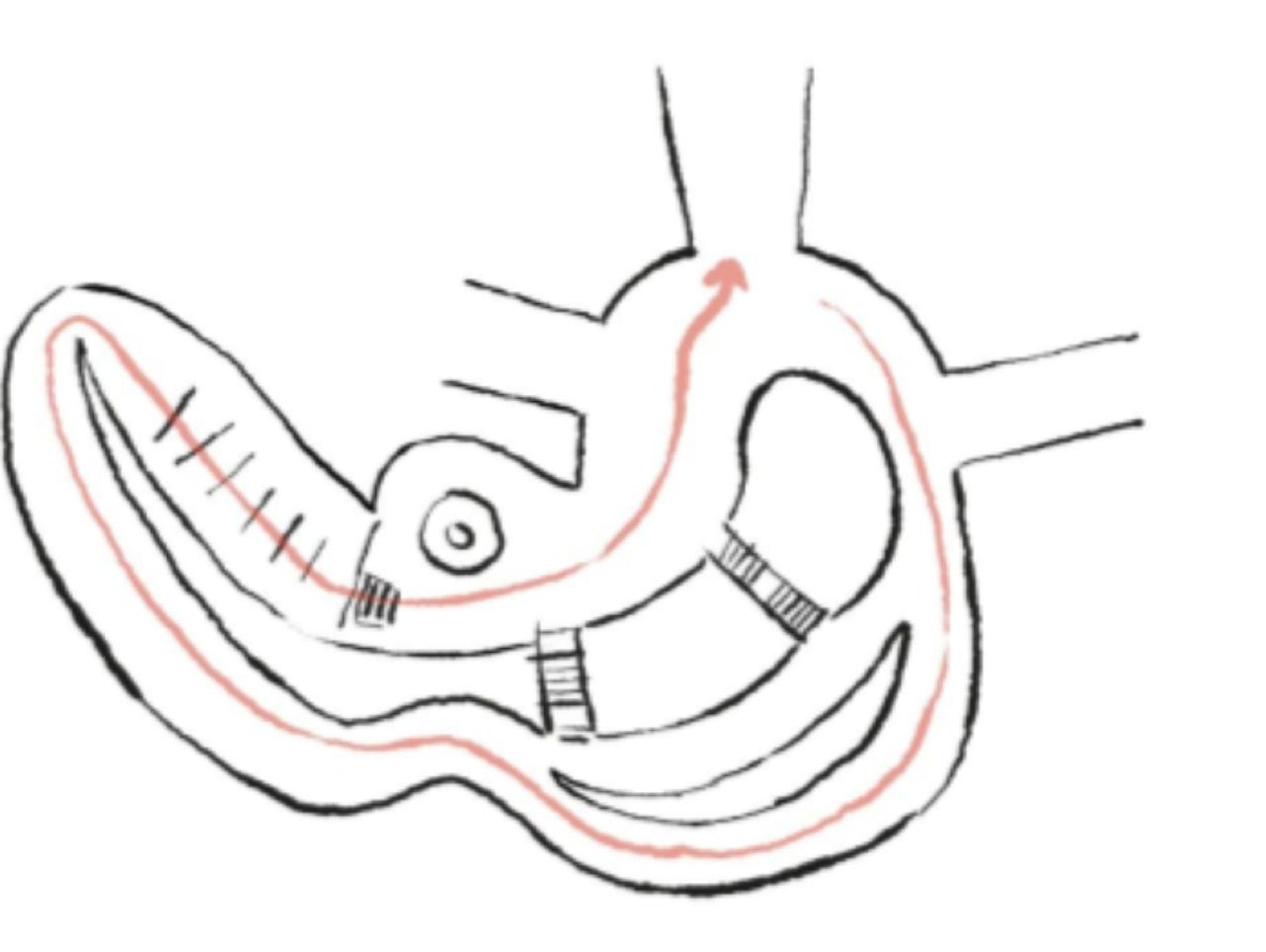

Initial rough layout based on the story and the timing of the interactive experience
Proposed Final Layout
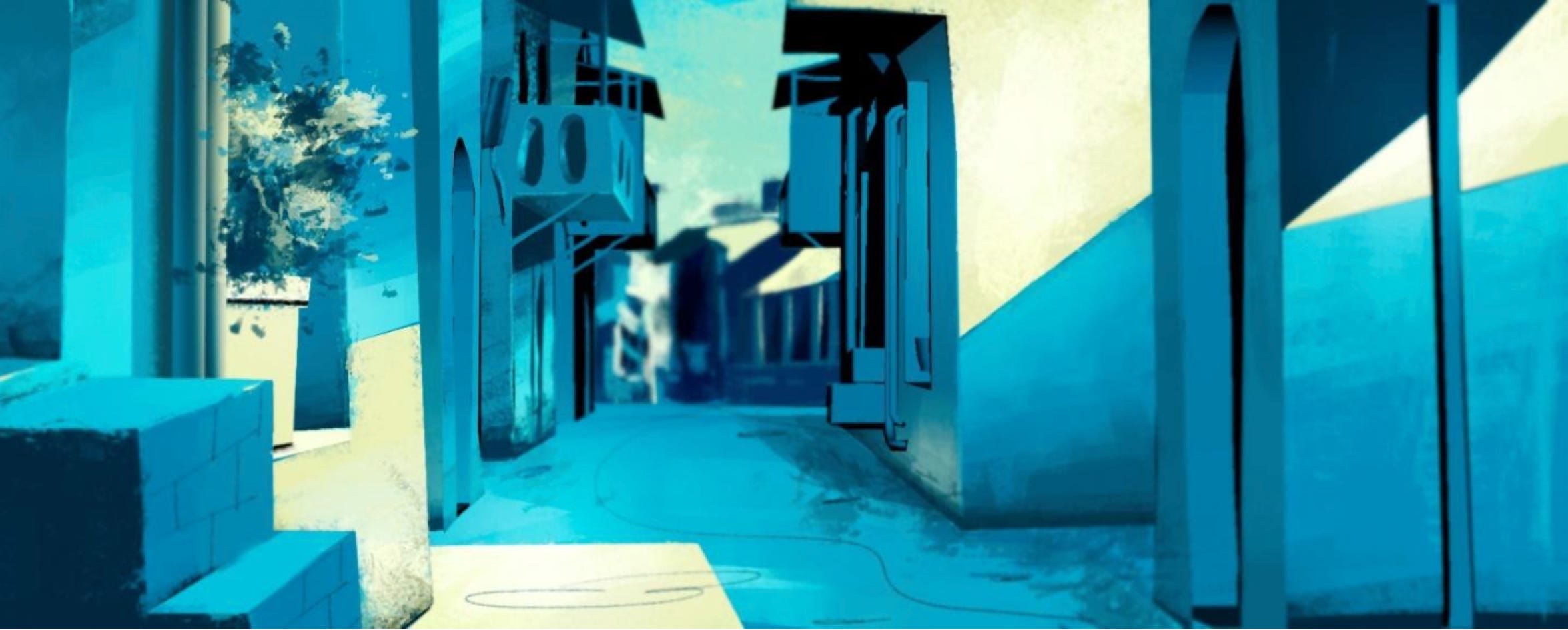
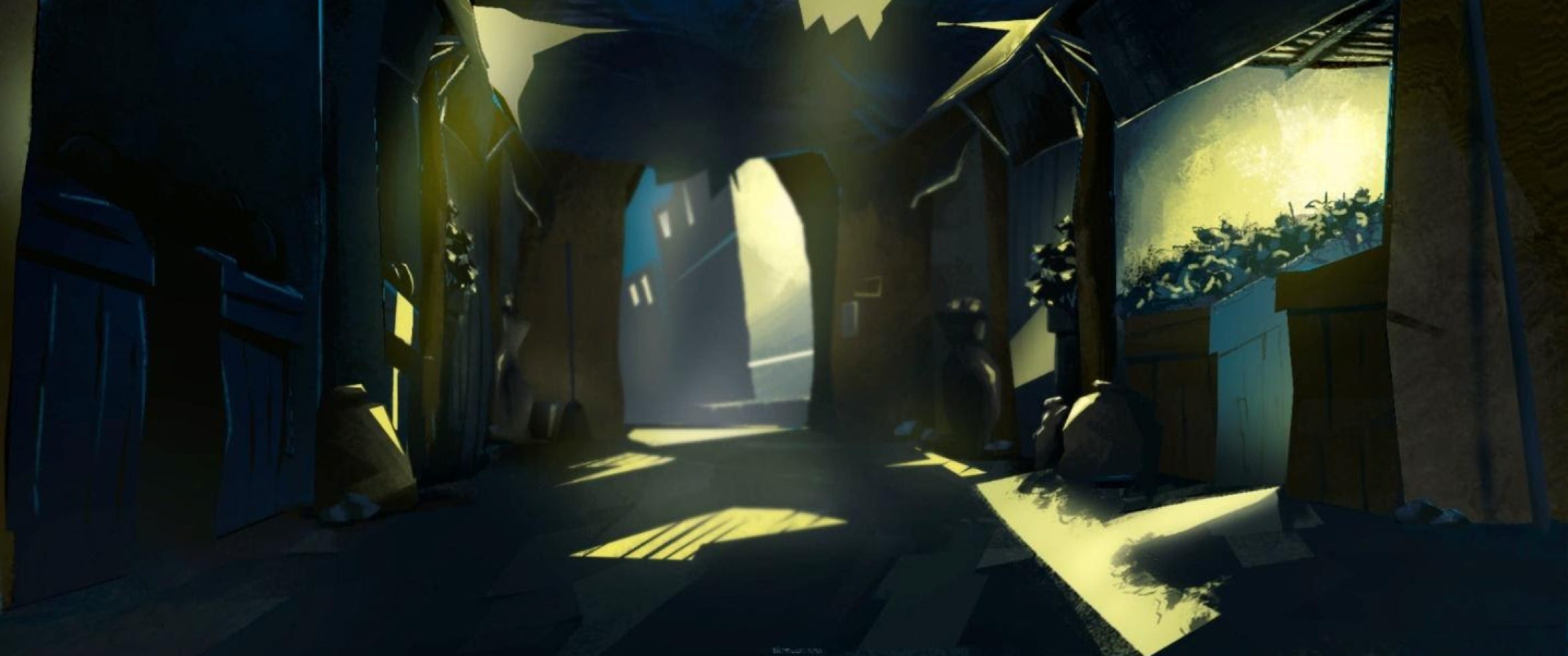
Based on our research, mood boards observations, the concept artist helped us visualise the scene in the proposed colour palette
Look Development
Research
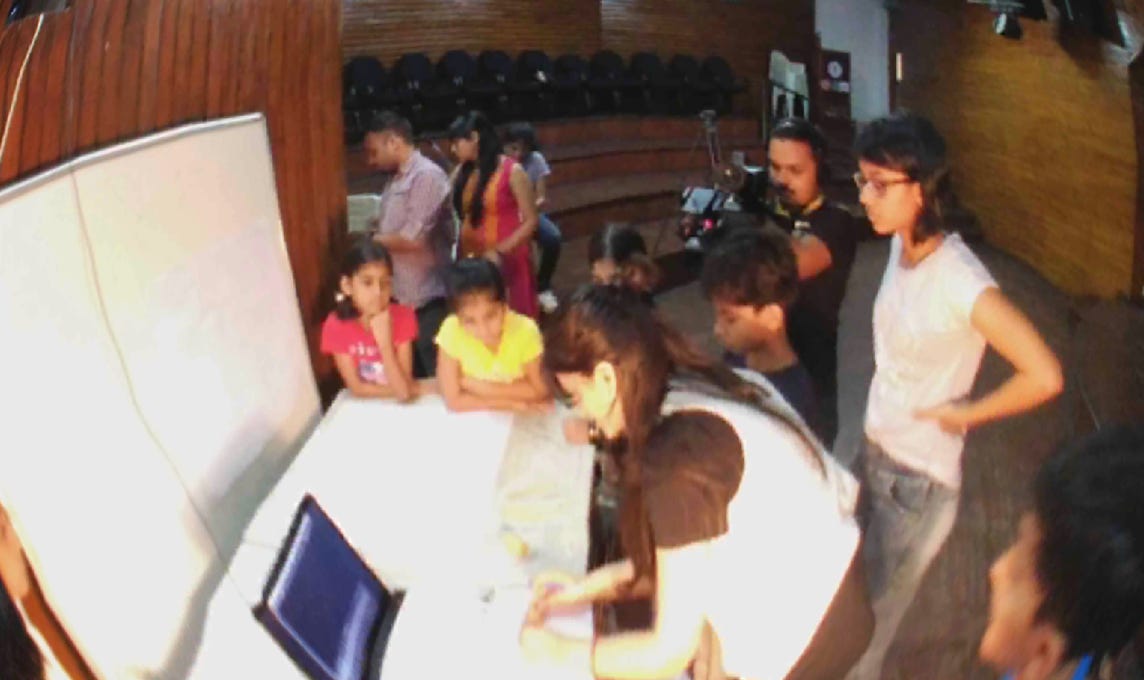
We considered and compared two different styles, Photorealistic and Stylised. We also did a small workshop with children of various age groups to understand the kind of visuals children are generally attracted to which would help us narrow down to a visual style and guide the approach.
Findings
Most of children showed a liking towards simplified, stylised and vibrant visuals.
Outcome
Considering the cost implications for realtime photorealistic rendering, we decided to develop a Stylised 3D rendering which will appeal more to the target audience. We decided to use the Unity 3D game engine to execute the project.
Production process
Next step was to create and set up the process
My role at this stage was to guide the artists and set up the guidelines for production.
Modelling
UV Unwrap
Lighting
Special FX
Sound Design

Texturing
Animation
Programming
Asset Creation
Keeping that in mind the artists started with sketching the various visual elements.
My role at this stage was to guide the artists and design the assets which would be compatible with the game engine.

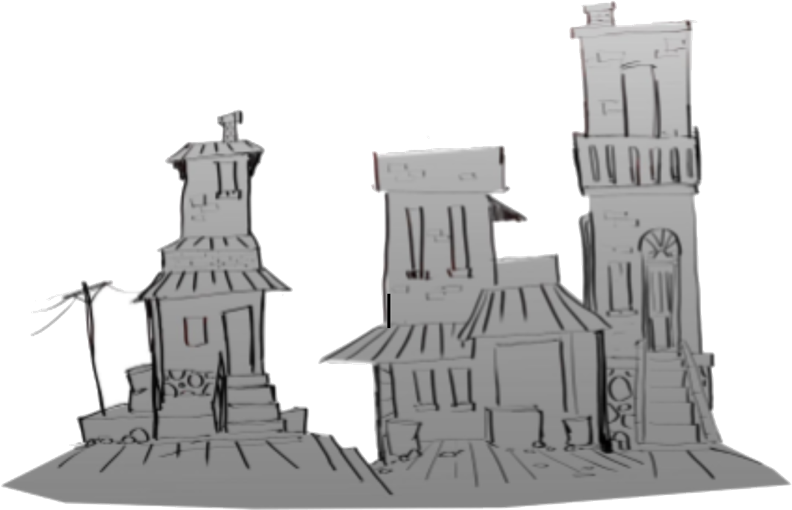
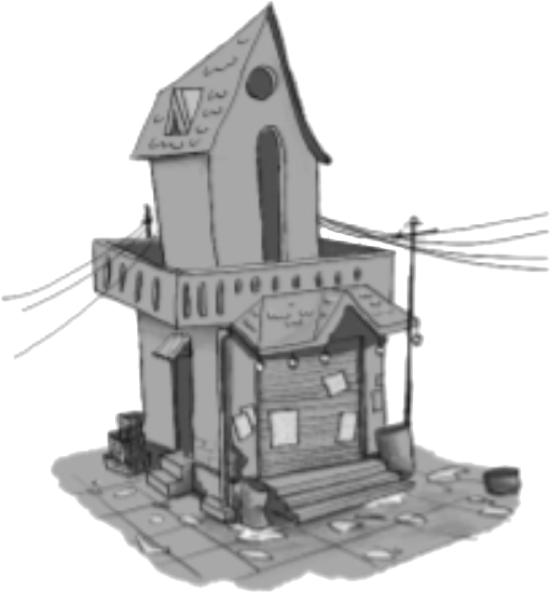
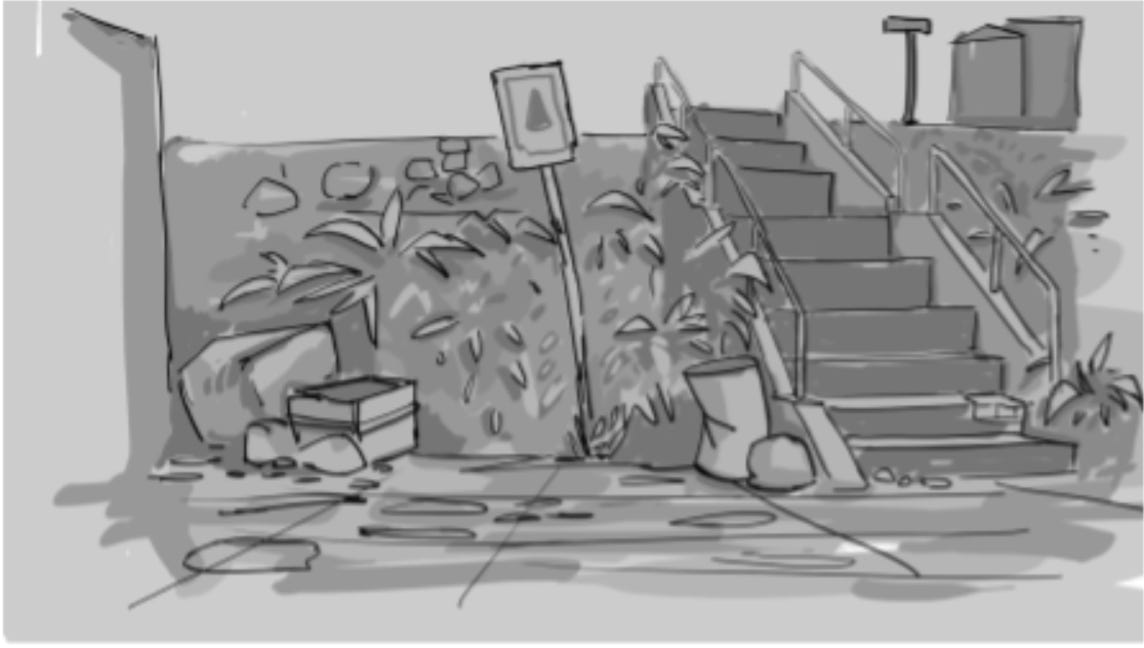
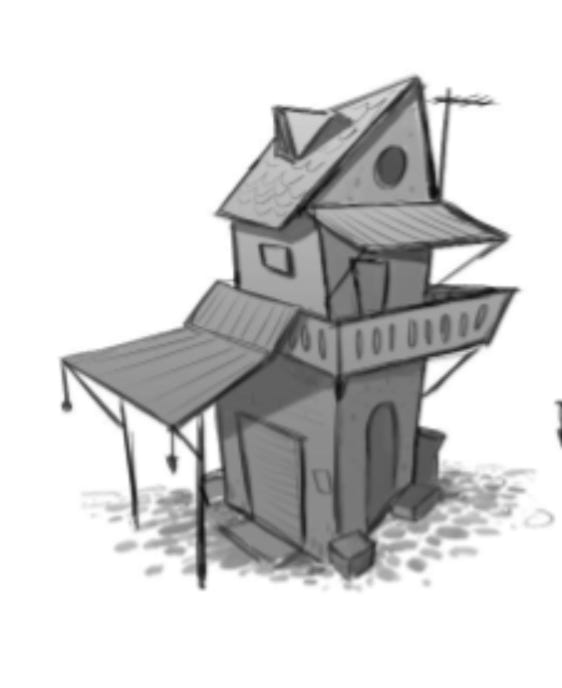
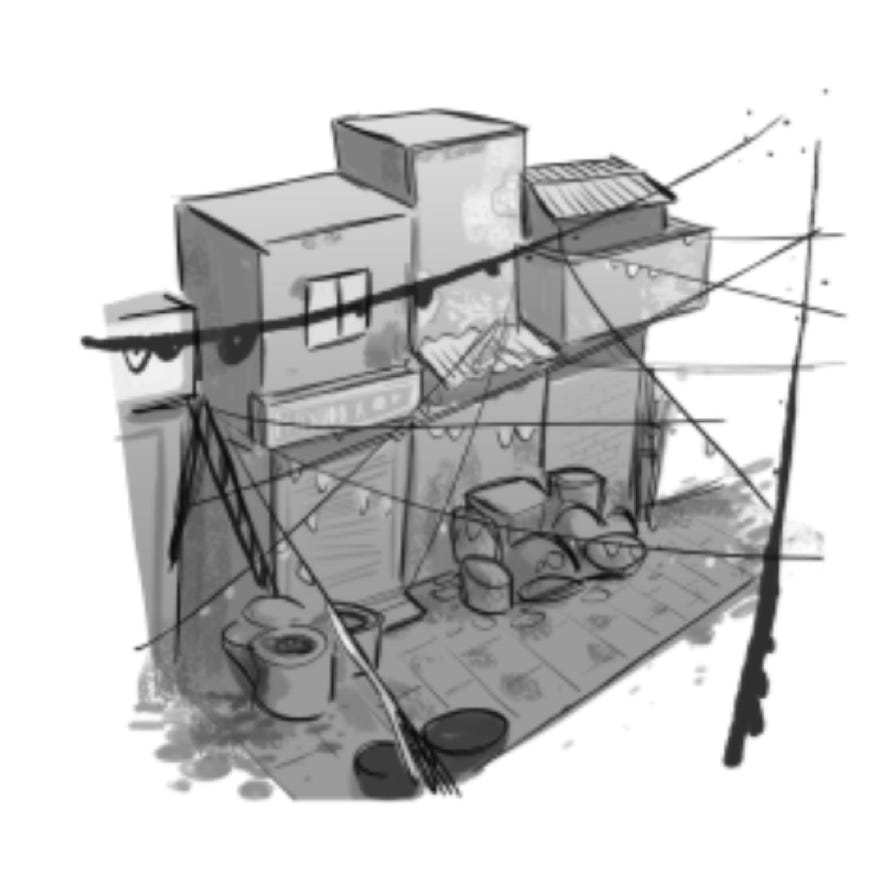
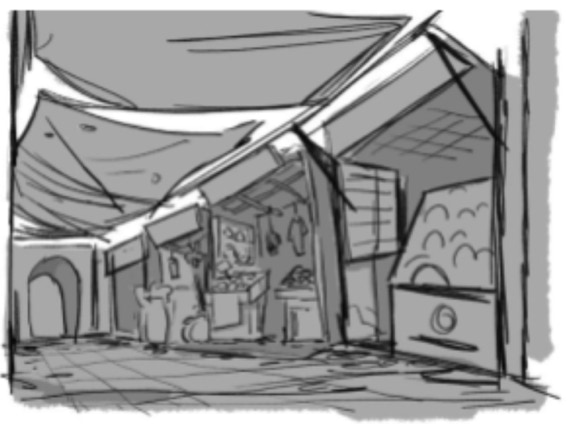
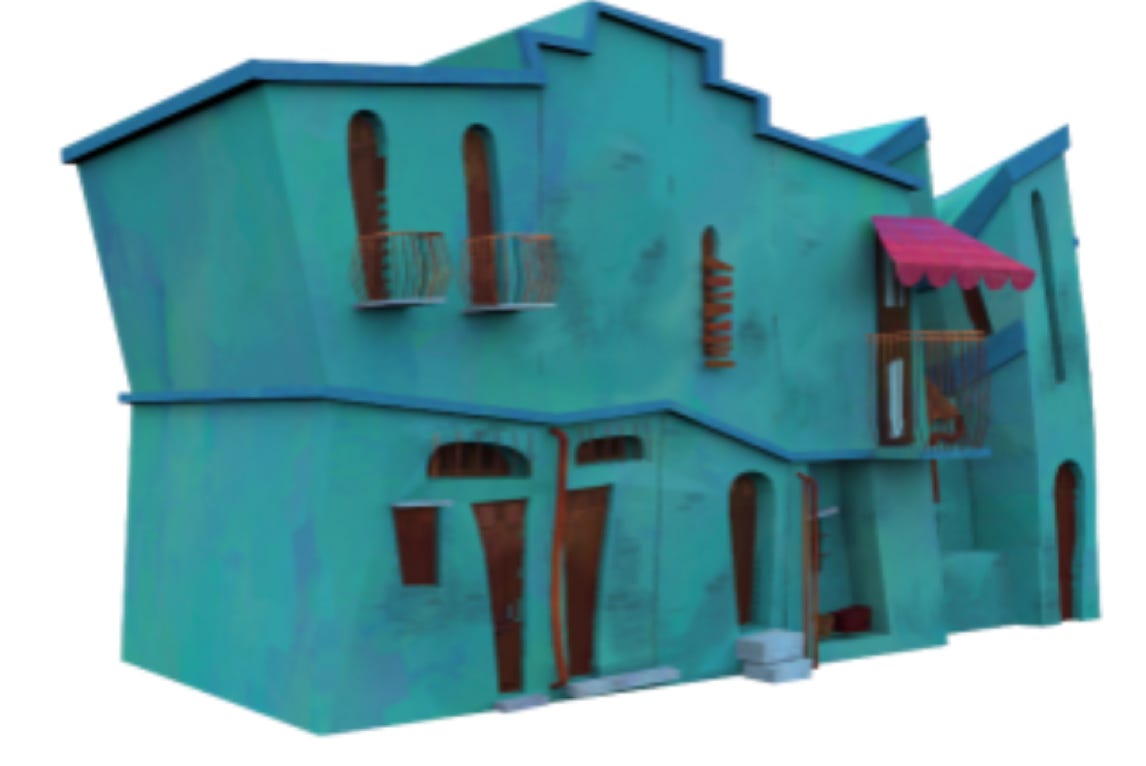
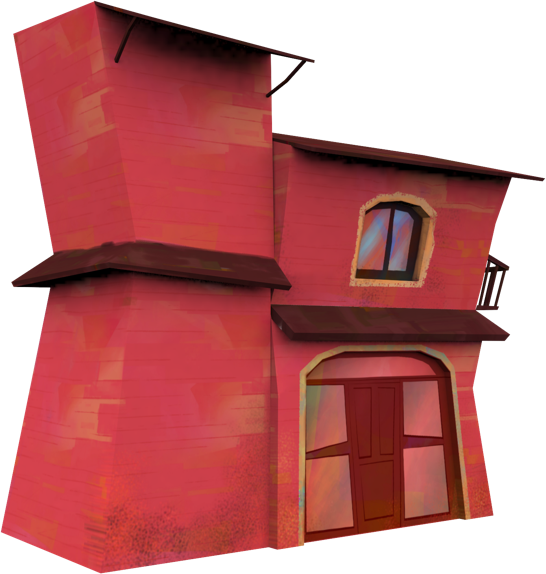
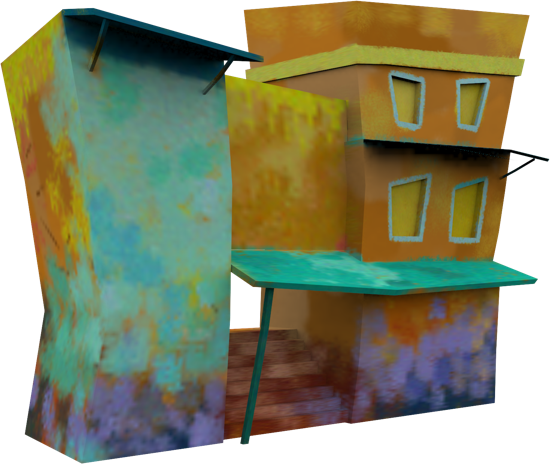
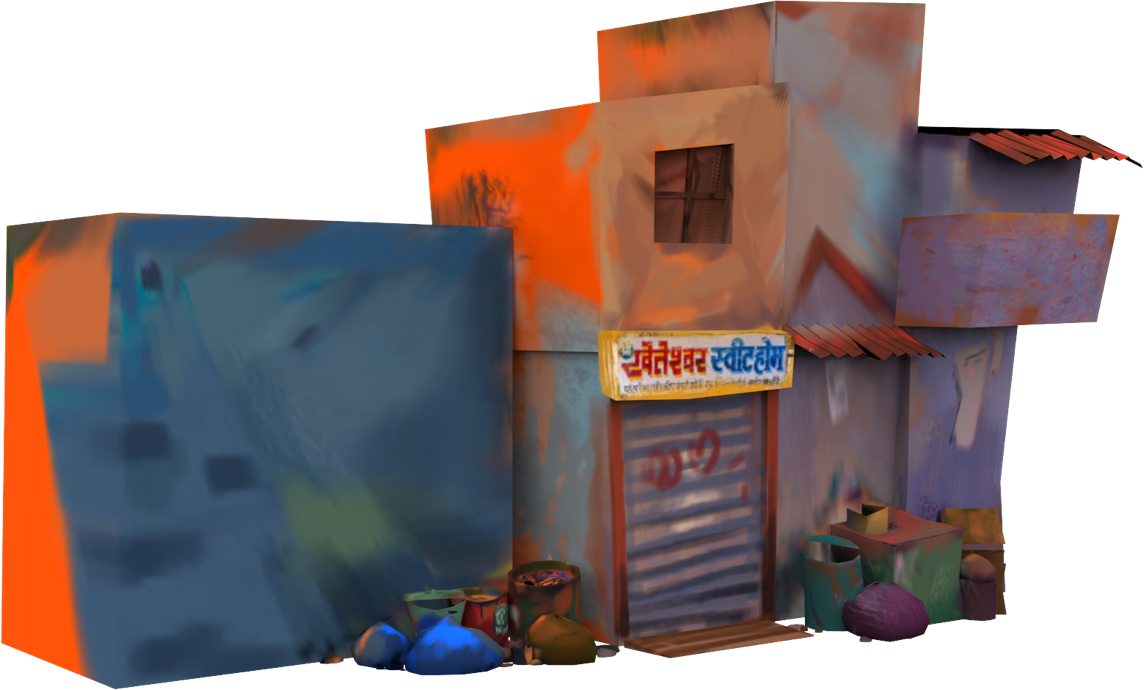
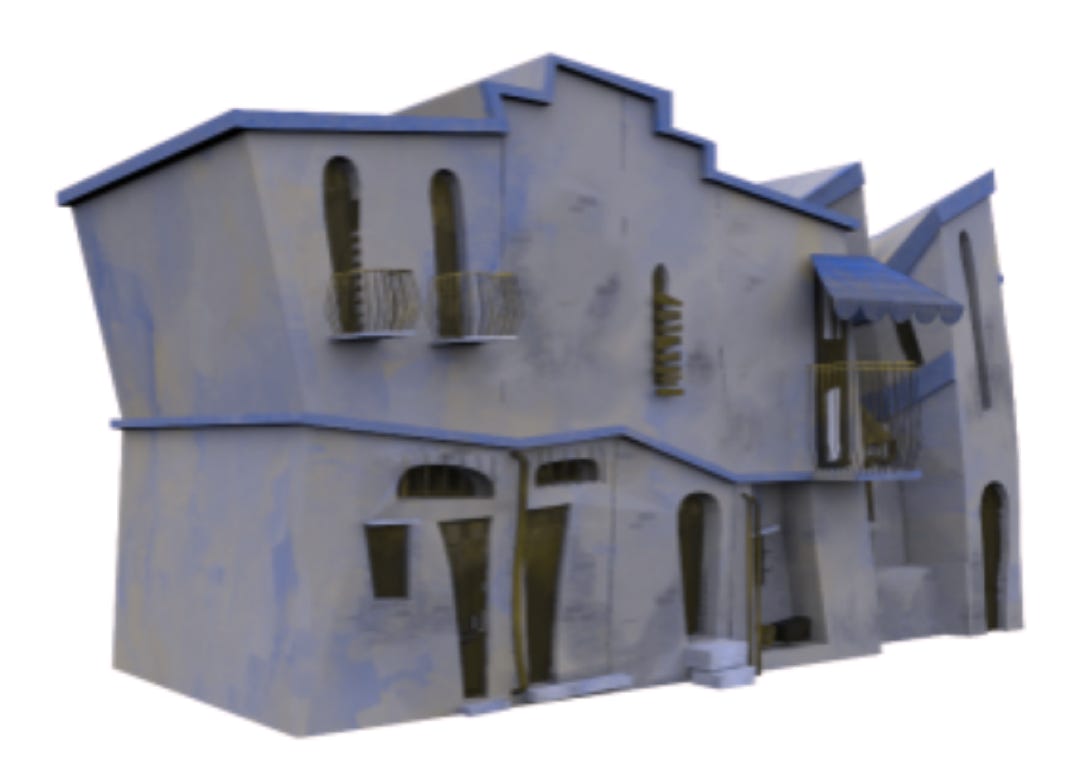
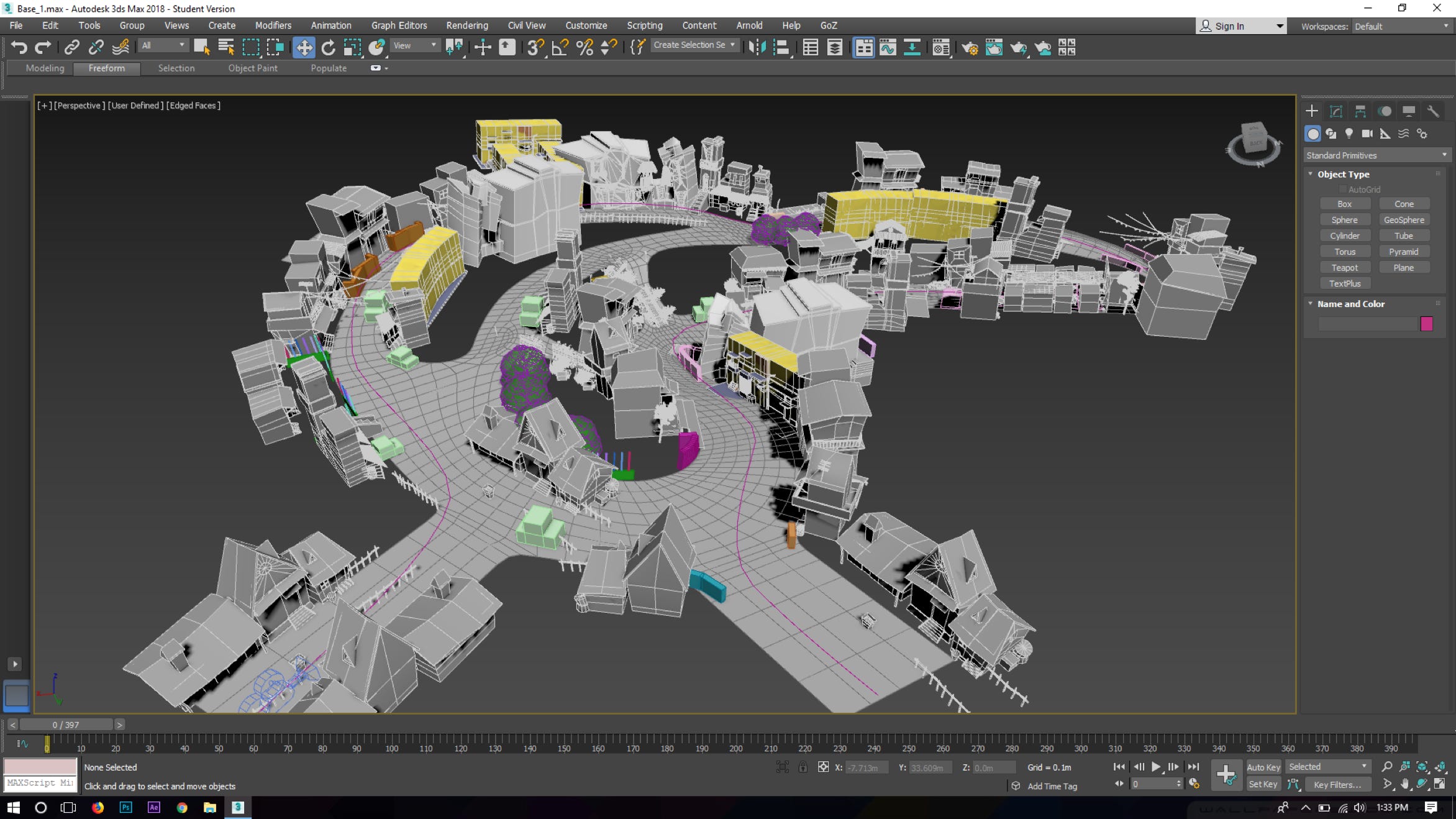
We designed a library of Houses, markets, cars, cows, hand carts etc.
3D Modelling
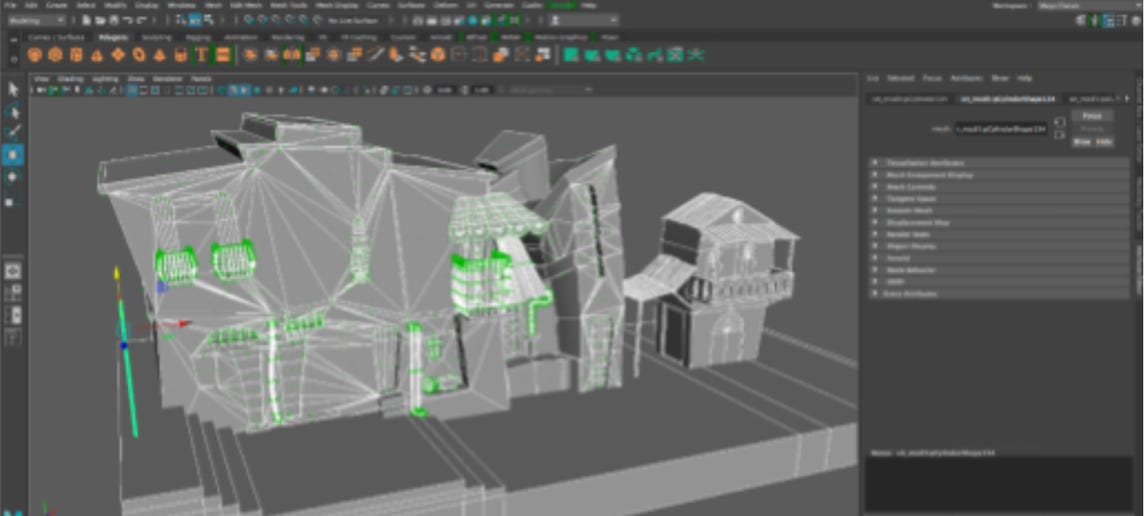
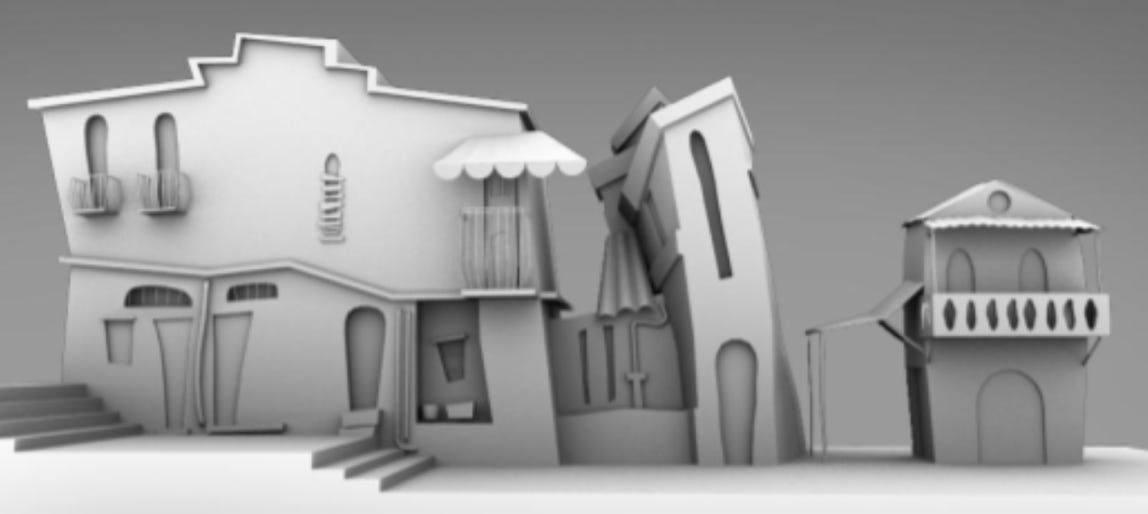
We used Autodesk 3DS Max for low poly asset creation. My role here was to design the 3D production pipeline to translate the 2D designs into 3D models which are compatible with Unity Game Engine. I created some of the assets and mentored the 3D team to maintain the mesh resolution, poly-count and the UV unwrapping
Texturing
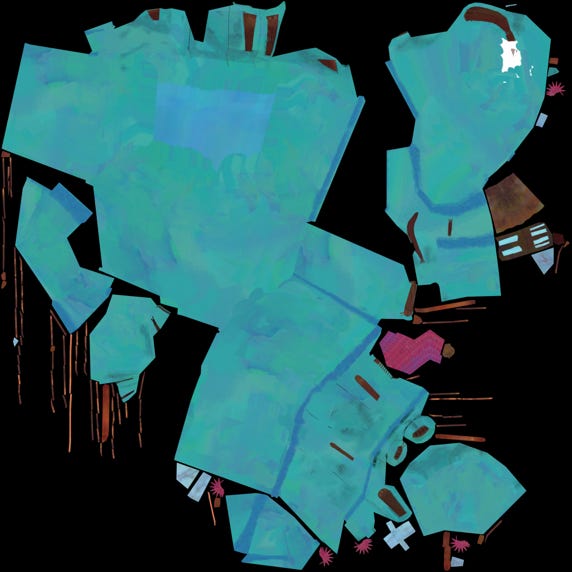
+
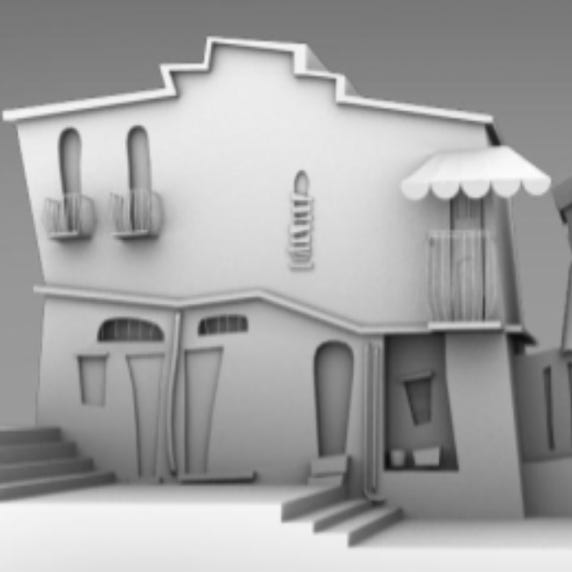
=
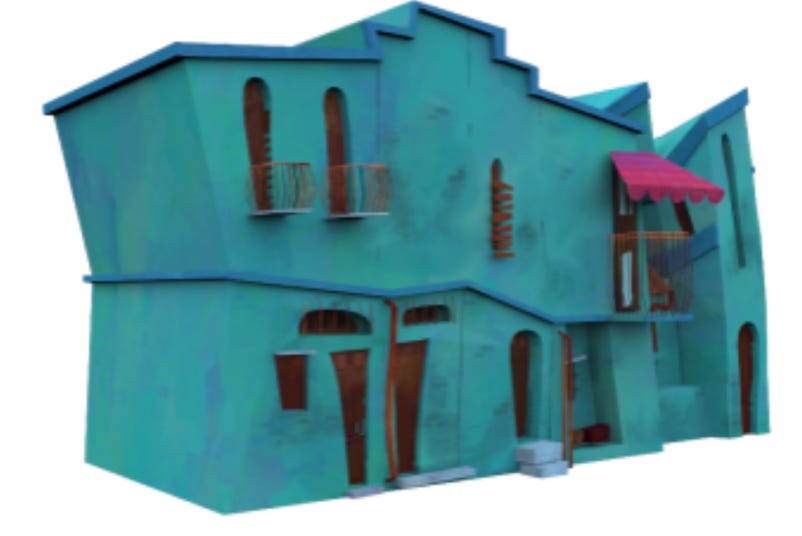
We used grungy hand painted textures rather than procedural textures to achieve a unique stylised and vibrant look and feel of the environment.

Challenge
Our next big challenge was to create all the textures sticking to the colour-blind palette. There were numerous assets and it was a very lengthy process and difficult to maintain consistency.
Solution
My solution for this problem was to let the artists paint the way they are used to, and use a shader in the game engine to render the colour blind effect at realtime. This makes the process foolproof, stress free and time saving.
>
Actual colours
Colours at realtime
Animation
My next task was to Animate the different characters, objects and effects. All the research and studying animal behaviours came in handy for animating the characters.
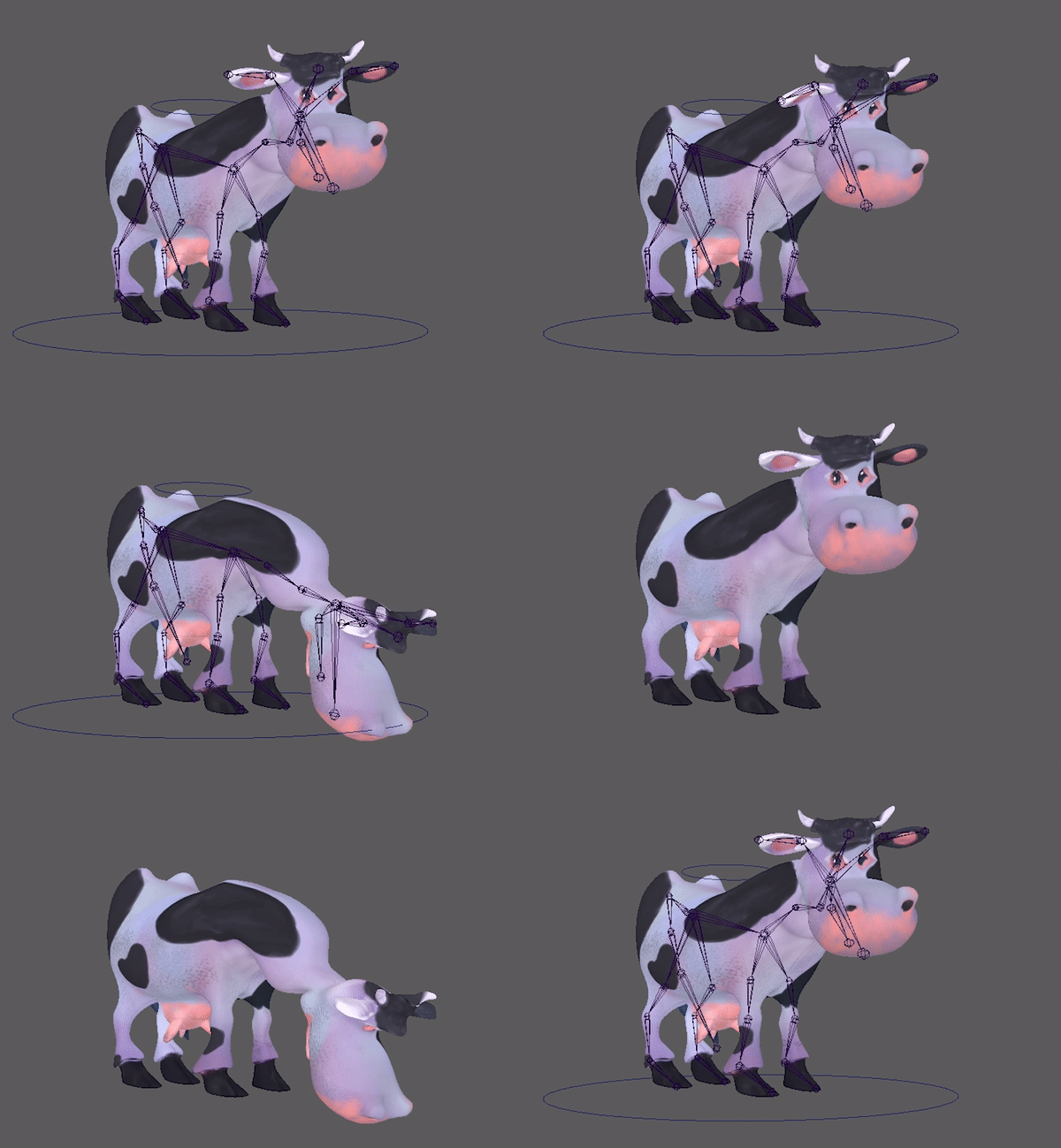
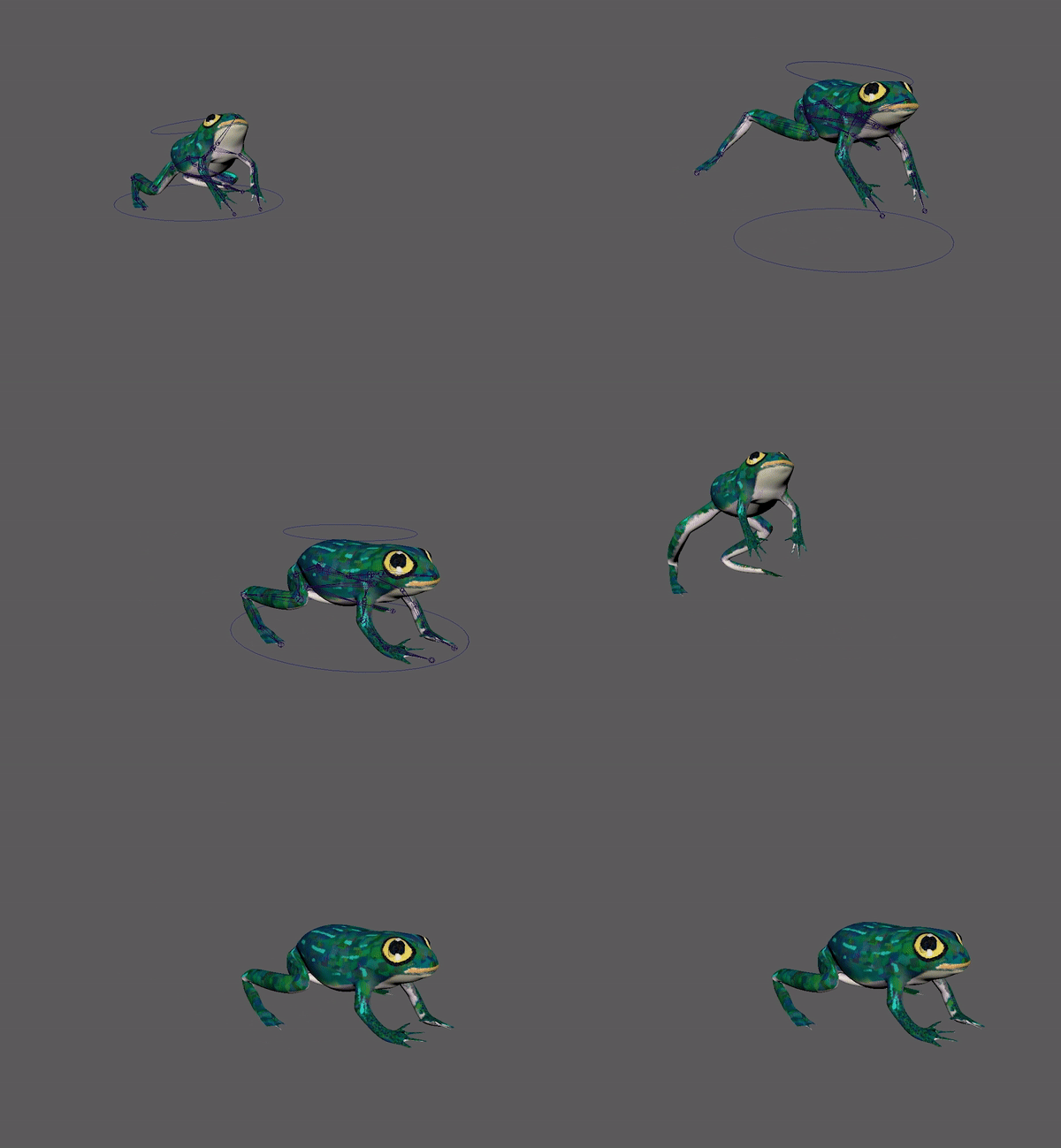
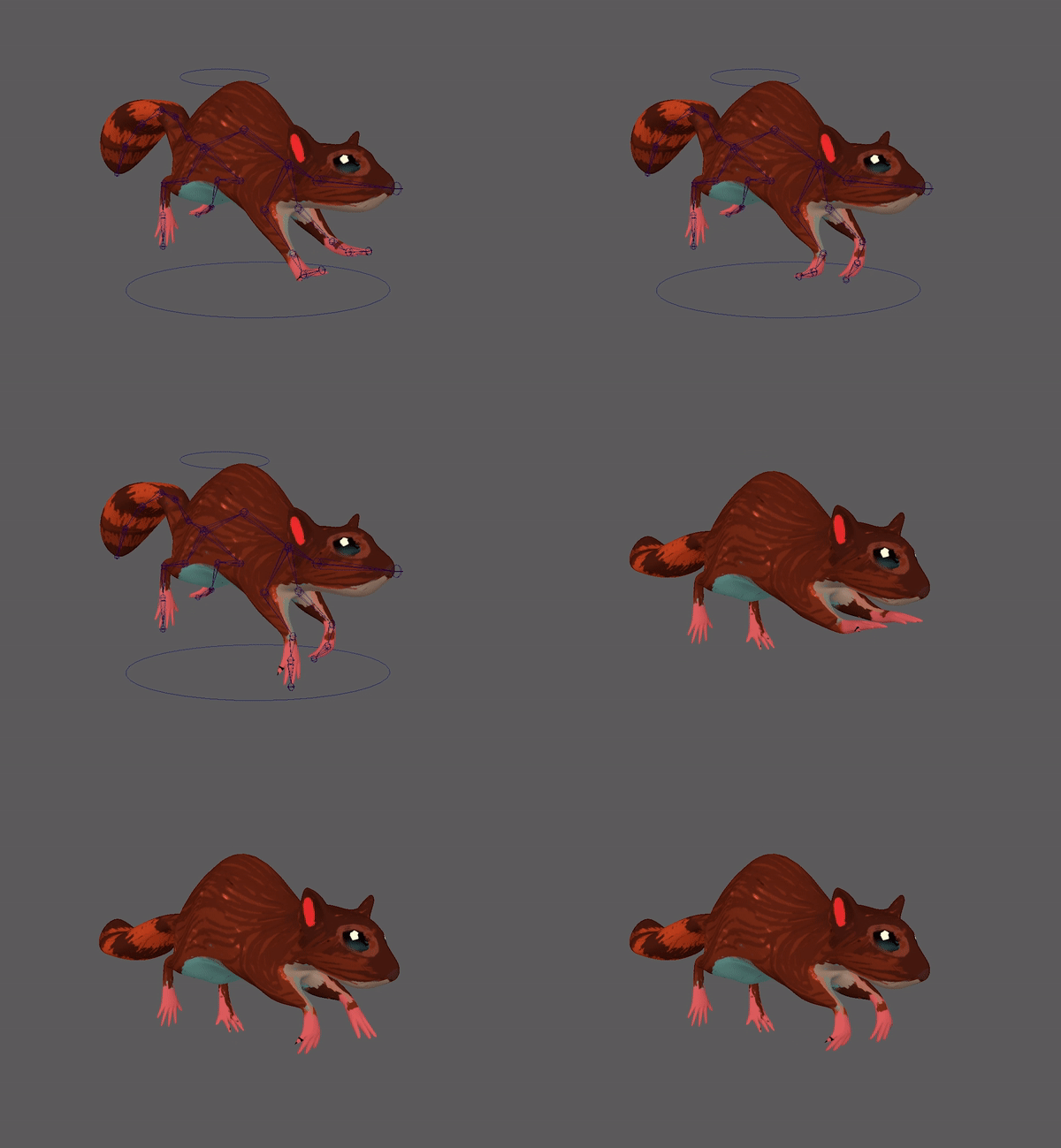
Compiling assets for the Game Engine
Final Output

Dog POV Walkthrough
We worked on the similar lines for the Fish and Bird POVs